
Cedar ParkCedar Park
Ten miles to Lake Travis. Twenty minutes to Apple. For strong schools and quiet streets, this is the place.
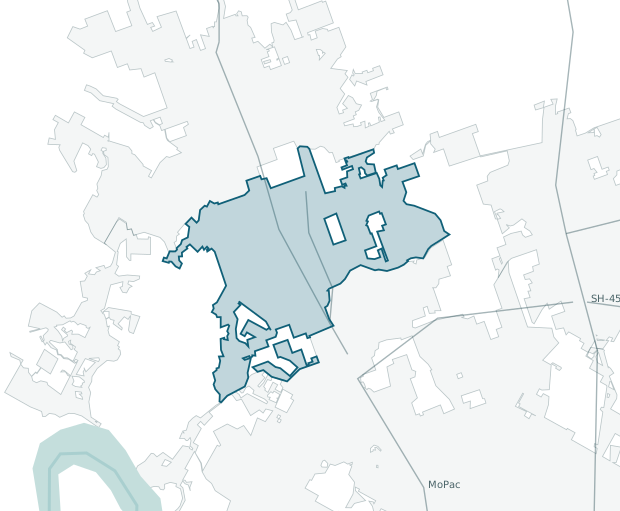 LeanderRound RockAustinJonestownCedar ParkH-E-B CenterBrushy Creek Lake ParkLakeline MallCity limits: U.S. Census TIGER · Roads & lakes: Natural Earth
Great schools. Quiet streets.
What homes sell forin Cedar Park right now.
The Jan–Aug 2026 median compared with last year. Single-month numbers swing with the number of sales.
Source: Unlock MLS Residential Market Snapshot (City of Cedar Park, residential), retrieved Sep 26, 2026. Deemed reliable but not guaranteed.
Mostly Leander ISD. Check any address in seconds.
Some Brushy Creek addresses are zoned to Round Rock ISD. Always verify by address before you choose a home.
Check zoned schools ↗An easy drive in.An easier drive home.
Typical drive times from central Cedar Park. Allow more at rush hour.
Easy weekdays.Lakeside weekends.
Where you’lldo your shopping.
Good now.Better every year.
A new shopping district, a new downtown, a bigger lakeside park. Cedar Park keeps adding more.
Sources: City of Cedar Park, Community Impact (2026), Perfect Game, UT Austin announcements. Timelines are as announced and may change.
Same city.Very different neighborhoods.
Numbers on the map match the cards below. Prices vary a lot within each neighborhood, so we leave them out — ask us and we’ll walk you through recent sales.
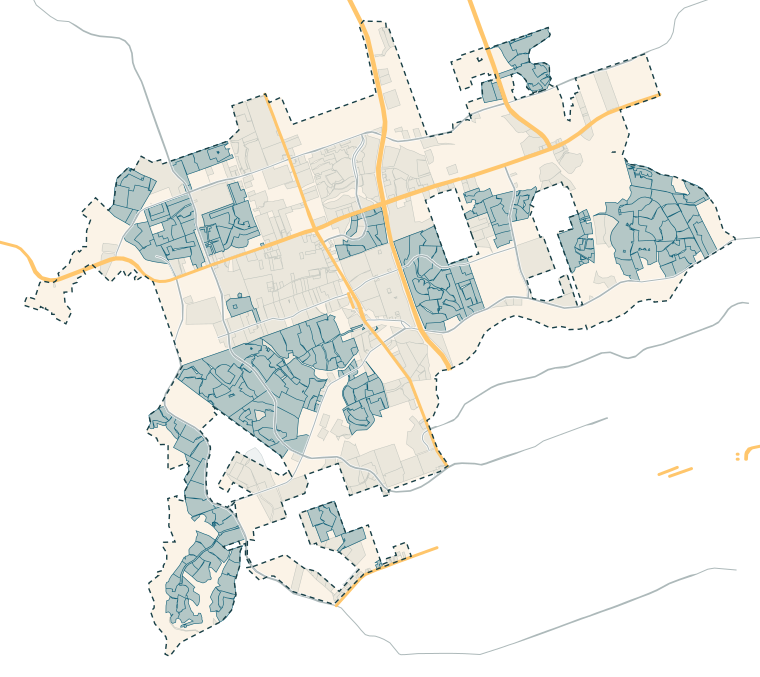
One of Cedar Park’s largest neighborhoods, built in phases from the 1980s to the 2010s — tree-shaded older streets alongside newer sections.
A master-planned community from the mid-2000s to 2010s. Neighborhood paths connect straight to the Brushy Creek Regional Trail.
A 760-acre golf community around a Fred Couples–designed course. Country club membership is mandatory (monthly dues).
A hilltop neighborhood next to Twin Creeks, with many view lots and quick access to US 183 and Lakeline shopping.
An established neighborhood west of Lakeline Blvd, split into sections such as Crossing, Trails and Woods.
About 1,500 homes including Silver Oak, with a 2.5-mile wooded trail running through the middle.
A 455-home neighborhood off Cypress Creek Road, known for an active HOA with seasonal events.
A newer neighborhood built from the late 2000s to mid-2010s, with creekside lots and winding streets.
Built in the late 2000s, with underground utilities for clean streetscapes.
About 400 homes. The older section has no HOA; mid-2000s sections (Highlands, Preserve) have an HOA and pool.
Mostly one- and two-story homes from the late 1990s and early 2000s, with low HOA dues.
Custom homes on 1–3 acre lots, developed in the 1970s–80s — a fly-in community with its own small airstrip.
Built in the late 2000s, within walking distance of Brushy Creek Lake Park.
An early-2000s neighborhood on Cedar Park’s north side (Pulte, Wilshire Homes).
Ranch at Deer Creek and Cypress Canyon share one HOA. Built in the early 2000s near Anderson Mill Road.
Built from the late 2000s to early 2010s, south of RM 1431.
A gated neighborhood built from the mid-2010s, with wider spacing between homes and a smaller-home Cottages section.
Built in phases from the late 1980s through the 1990s, with mostly mid-size homes.
Zoned schools come from checking several points in each neighborhood against each district’s public attendance-zone map (Leander ISD 2024–25 and others). Zones change and can split a neighborhood — always confirm by address. Amenities are from HOA, MUD and city public information.
"Great for families who want good schools without the bustle. On weekends, Lake Travis is 20 minutes away."
Its edge: you can choose between established homes and new builds, all inside Leander ISD.